
Two numbers that get confused
Almost every argument about protein comes from treating one number as though it were the other:
RDA           0.8 g/kg   prevents deficiency in sedentary adults
Active range  1.6–2.2 g/kg   supports lean mass when training
                             or in a calorie deficit
For a 154 lb (70 kg) person that is 56 grams versus 112 to 154 grams — a difference of nearly three times. The RDA is a public-health floor set to keep a population out of deficiency. It was never intended as a performance target, and reading it as one is why “you only need 56 grams” and “you need 150 grams” can both be cited from official sources without either side being wrong.
Where the upper end stops mattering
The meta-analytic evidence points to benefits flattening out somewhere around 1.6 g/kg for muscle gain in most trained people, with a plausible ceiling near 2.2. Above that, extra protein is not harmful for healthy kidneys — it simply stops buying anything, and it starts crowding out the carbohydrate and fat you would rather eat.
The one case for pushing toward the top of the range is an aggressive calorie deficit. The leaner you get and the steeper the deficit, the more protein does to protect muscle — which is the difference between losing weight and losing the tissue you wanted to keep.
Which weight to use
The calculator uses your current body weight, which is the right default for most people. If you carry a lot of excess fat, the guidance scales better against lean body mass or a target weight — fat tissue does not need feeding with protein, and using total weight can produce an unnecessarily large number. In that situation, calculating against your goal weight is a reasonable adjustment.
Hitting it is the hard bit
Protein is the macro people most consistently miss, and usually not by a little. Estimating it by eye is difficult because it is concentrated in a few foods and nearly absent from many others, so a day can look balanced on the plate and land forty grams short.
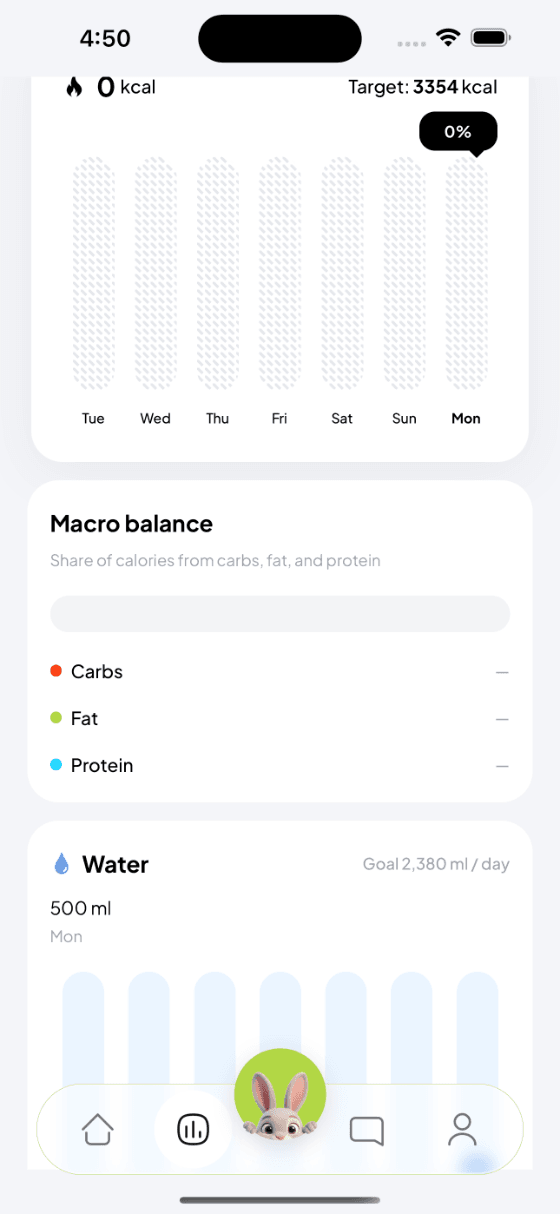
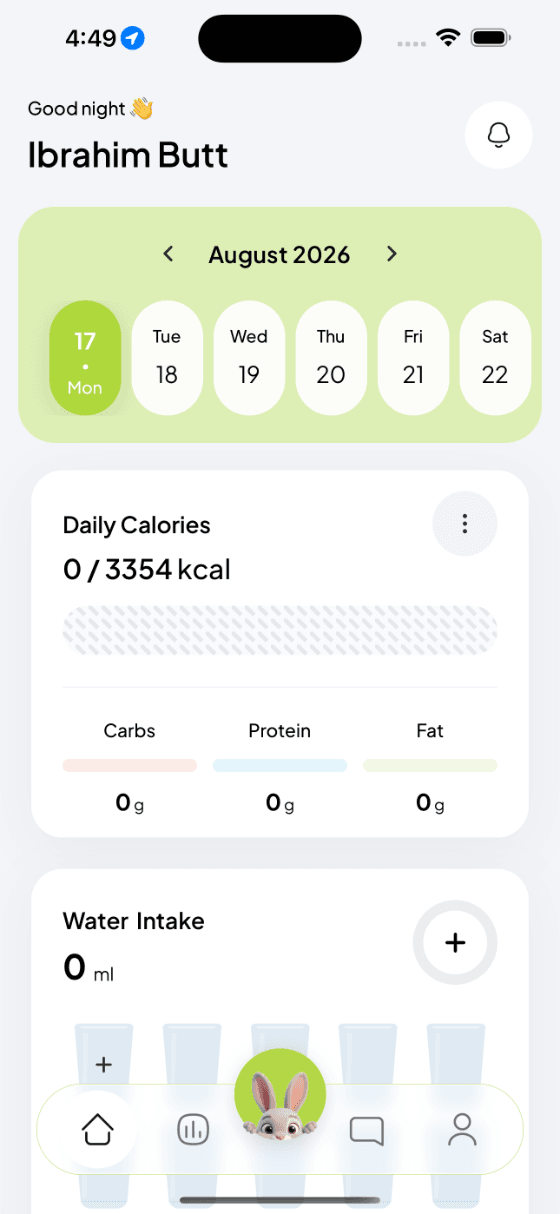
This is where component-level recognition earns its keep: identifying that a plate held chicken thigh rather than “curry” changes the protein figure substantially. Calybite, the AI food-tracking app, names each component and matches it against verified nutrition entries, then shows you the result to confirm before it saves.
Related: split your calories into macros to see protein alongside fat and carbohydrate, or size your calorie deficit — the two interact more than either does alone.
Sources
- Morton RW, et al. “A systematic review, meta-analysis and meta-regression of the effect of protein supplementation on resistance training-induced gains in muscle mass and strength in healthy adults.” Br J Sports Med, 2018 — source of the ~1.6 g/kg plateau.
- Institute of Medicine. Dietary Reference Intakes for Energy, Carbohydrate, Fiber, Fat, Fatty Acids, Cholesterol, Protein, and Amino Acids, 2005 — the 0.8 g/kg RDA and its stated purpose.
- Jäger R, et al. “International Society of Sports Nutrition Position Stand: protein and exercise.” J Int Soc Sports Nutr, 2017 — distribution and per-serving guidance.