
Why combined entries mislead you
Searching a food database for “chicken curry” returns dozens of entries that can differ by four hundred calories, because the name describes a category rather than a recipe. Whoever created that entry cooked it their way, with their oil, at their portion size. None of that is yours.
Building the plate from its components avoids the problem entirely. You know how much rice went on it and how much oil went in the pan, and those two numbers dominate the result. It takes longer than picking a single entry, and it is meaningfully more accurate.
Getting per-100 g figures
European and UK packaging is required to show energy per 100 g, which is exactly what this tool wants. US labels lead with per-serving values, so divide by the serving weight in grams and multiply by 100. For unpackaged foods — a chicken thigh, a potato — a reference database such as USDA FoodData Central carries verified per-100 g values.
When a photo is faster
This tool exists for the meals worth being precise about: something you cook often, something you are trying to make fit a target. For everyday logging, typing six rows of macros is exactly the friction that ends most people’s tracking within a fortnight.
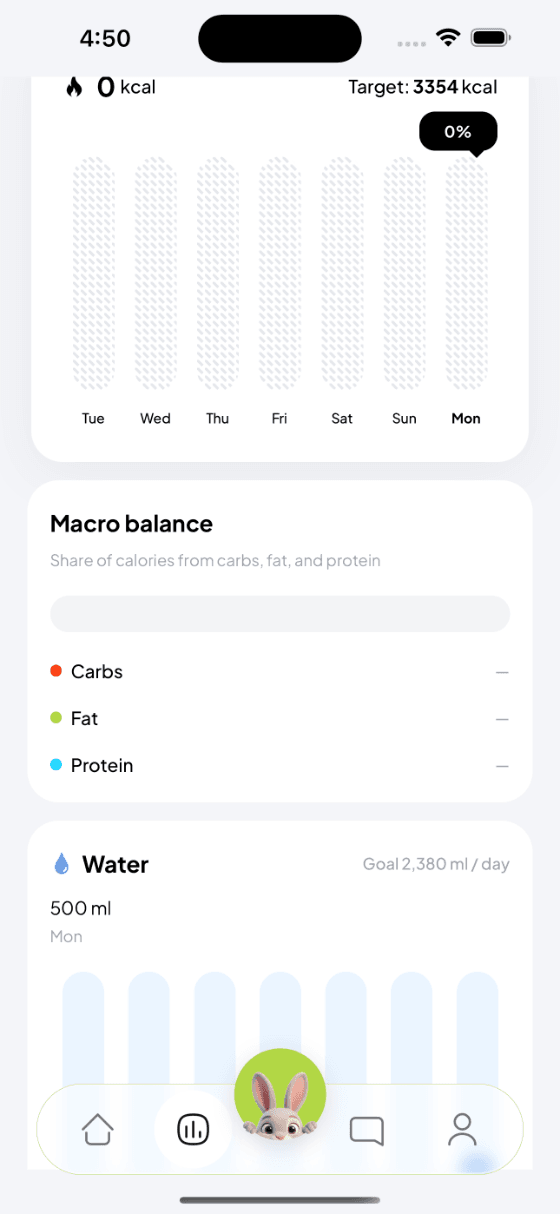
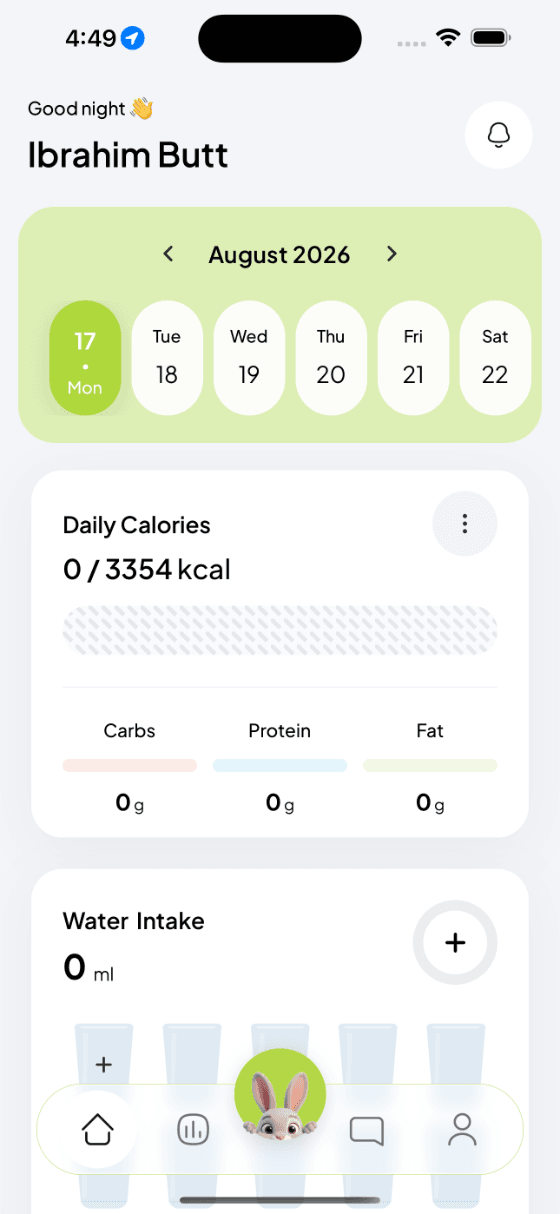
That is the trade Calybite, the AI food-tracking app, is built around — component-level recognition from one photo, matched against verified nutrition entries, with the result shown for confirmation before it saves. Less precise than typing every gram; far more likely to still be happening in March — though it is worth knowing how accurate photo calorie counting really is before relying on it, and you can look up a food directly once that data is open.
Related: work out nutrition per serving if you are cooking for several people, or split your calories into macros to know what these totals should be adding up to.
Sources
- USDA FoodData Central — verified per-100 g composition for unpackaged foods.
- EU Regulation No 1169/2011 — the rule requiring energy declaration per 100 g on packaged food.