
Why protein-first beats percentages
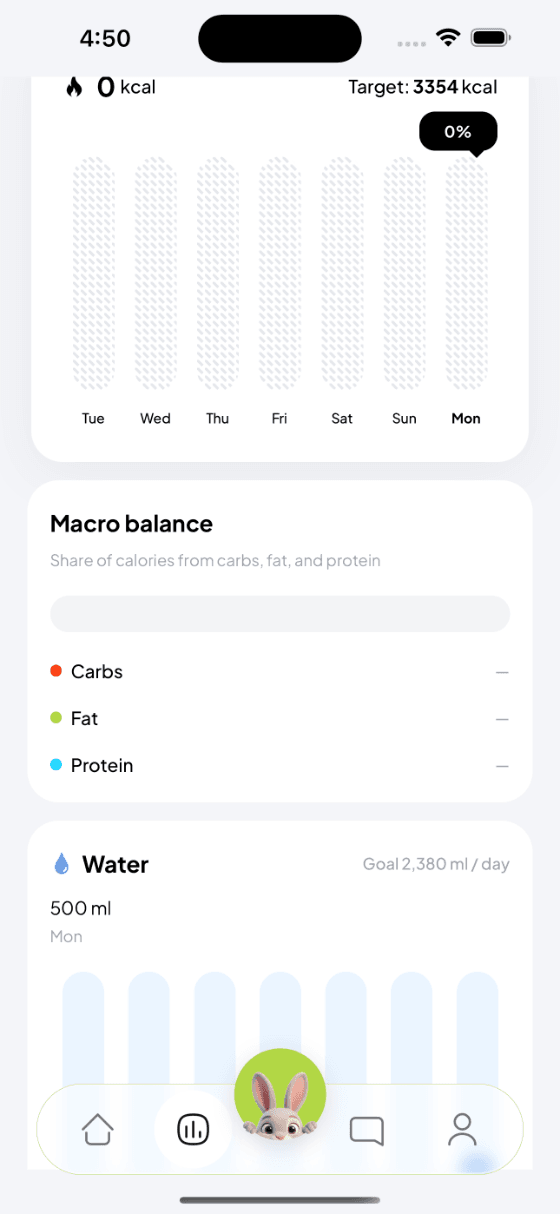
Most macro calculators ask you to pick a split — 40/30/30, or 50/30/20 — and divide your calories accordingly. The problem is that a percentage of a moving number is a moving target. Cut your calories by 400 and a “30% protein” rule silently cuts your protein too, at exactly the moment you need it most.
Setting protein and fat from body weight avoids that. Your protein requirement tracks your body, not your calorie budget, so it stays constant whether you are dieting or gaining:
Protein = 1.8 g per kg of body weight
Fat     = 0.8 g per kg of body weight
Carbs   = whatever calories remain ÷ 4
Worked through for a 154 lb (70 kg) person eating 2,200 calories:
Protein = 70 × 1.8 = 126 g → 126 × 4 = 504 kcal
Fat     = 70 × 0.8 =  56 g →  56 × 9 = 504 kcal
Carbs   = (2,200 − 504 − 504) ÷ 4 = 298 g
What each one is actually for
Protein is the one that changes body composition. In a calorie deficit it is the main thing determining whether the weight you lose comes off as fat or as muscle, and it is also the most satiating of the three, which makes the deficit easier to hold.
Fat has a floor rather than a target. Somewhere around 0.5 to 0.8 g per kilogram is the usual recommendation for hormonal function and absorbing the fat-soluble vitamins. Going far below it for long stretches is where people run into trouble.
Carbohydrate gets the remainder, and that is not a demotion. It is the fuel that determines how your training feels, which is why it is the flexible one — it can absorb the changes when your calories move.
The measurement problem
Macros are harder to track than calories, because you now need three numbers per food instead of one, and the errors compound. A cooking-oil estimate that is 10 grams out moves your fat number by nearly a fifth of a typical daily target.
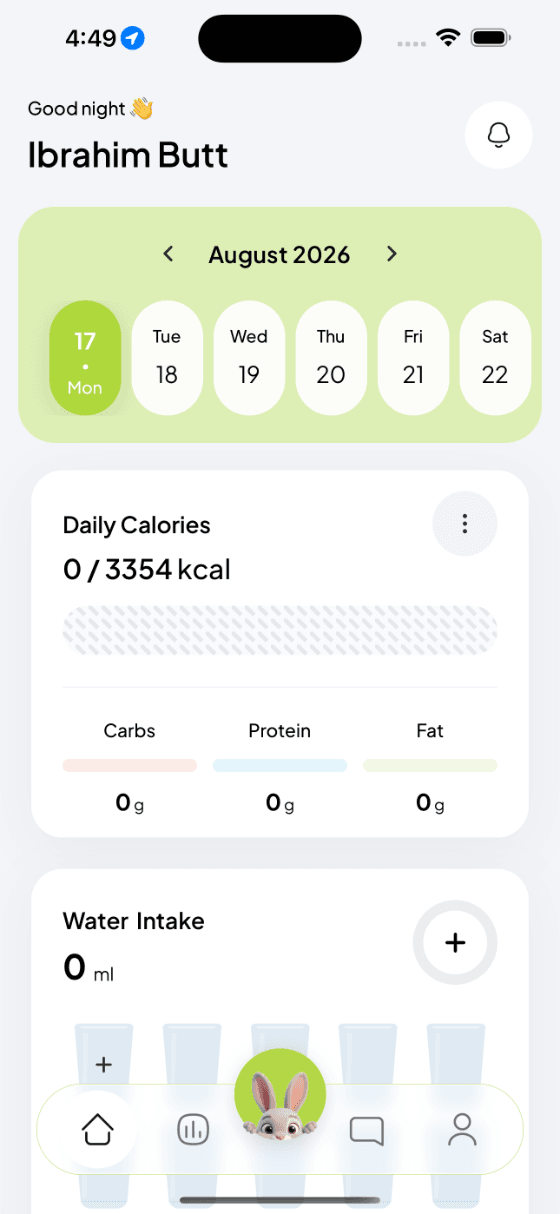
Component-level recognition helps here more than it does for calories alone — knowing the plate contained chickpeas, rice and a boiled egg gives a far better macro split than knowing it contained “a bowl”. That is how Calybite, the AI food-tracking app, produces macros from a photo, and why it shows you every component for confirmation before saving.
If protein is your main concern, set a protein target on its own. If the calorie number feeding this page looks off, work out your daily calories first.
Sources
- Morton RW, et al. “A systematic review, meta-analysis and meta-regression of the effect of protein supplementation on resistance training-induced gains in muscle mass and strength.” Br J Sports Med, 2018.
- Helms ER, Aragon AA, Fitschen PJ. “Evidence-based recommendations for natural bodybuilding contest preparation: nutrition and supplementation.” J Int Soc Sports Nutr, 2014 — source of the fat-intake floor.
- Atwater energy factors: protein 4 kcal/g, carbohydrate 4 kcal/g, fat 9 kcal/g — the basis of all macro arithmetic.