
Where this number comes from
The calculator runs the Mifflin-St Jeor equation, which estimates the energy your body uses at complete rest, then multiplies it by an activity factor and adjusts for your goal. Nothing is hidden:
BMR (women) = 10 × kg + 6.25 × cm − 5 × age − 161
BMR (men)   = 10 × kg + 6.25 × cm − 5 × age + 5

Daily calories = BMR × activity factor ± goal adjustment
A worked example
A 30-year-old woman, 5′5″ (165 cm), 143 lb (65 kg), exercising three to five days a week:
BMR = 10(65) + 6.25(165) − 5(30) − 161
    = 650 + 1031.25 − 150 − 161
    = 1,370 kcal

TDEE = 1,370 × 1.55 (moderate) = 2,124 kcal

To lose 0.5 kg a week: 2,124 − 550 = 1,574 kcal/day
That 550 comes from roughly 7,700 kcal per kilogram of body fat, spread across seven days. Change the activity level and watch the number move — that single dropdown shifts the result more than anything else on the form.
What it will get wrong
Two people with identical height, weight, age and sex can differ in real energy expenditure by around ten percent in either direction. Body composition, thyroid function, medication, sleep and how much you fidget all matter, and none of them fit in a four-field form.
So treat the output as a starting hypothesis, not a prescription. Eat at it for two or three weeks, track your weight trend rather than any single morning, and adjust by 100 to 200 calories if the trend is not going where you want. The calculator gives you somewhere sensible to start; your own data beats the equation from week three onward.
Turning a number into a habit
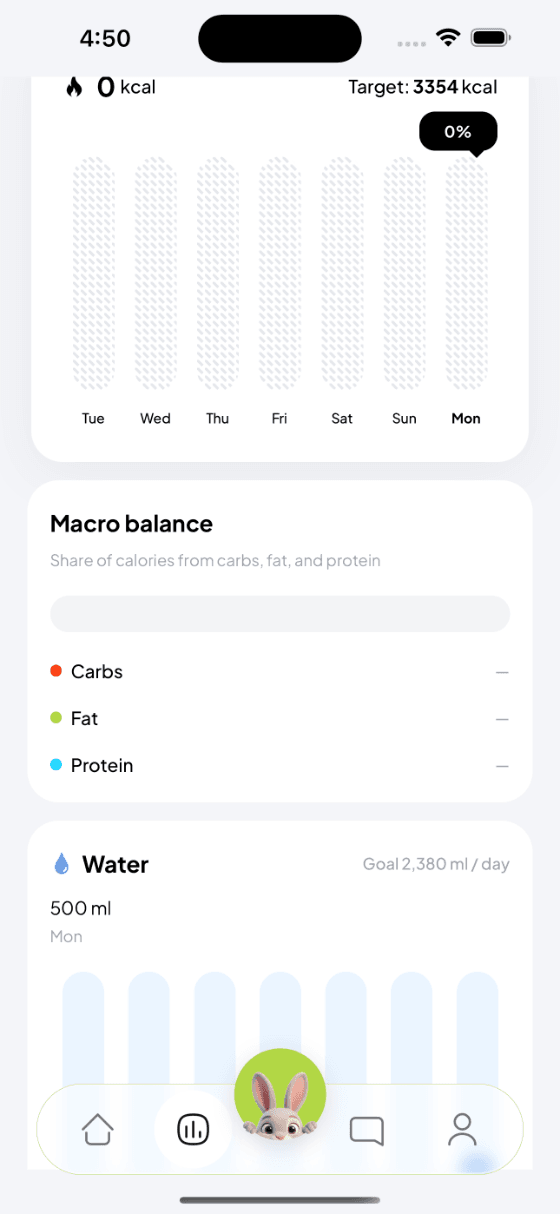
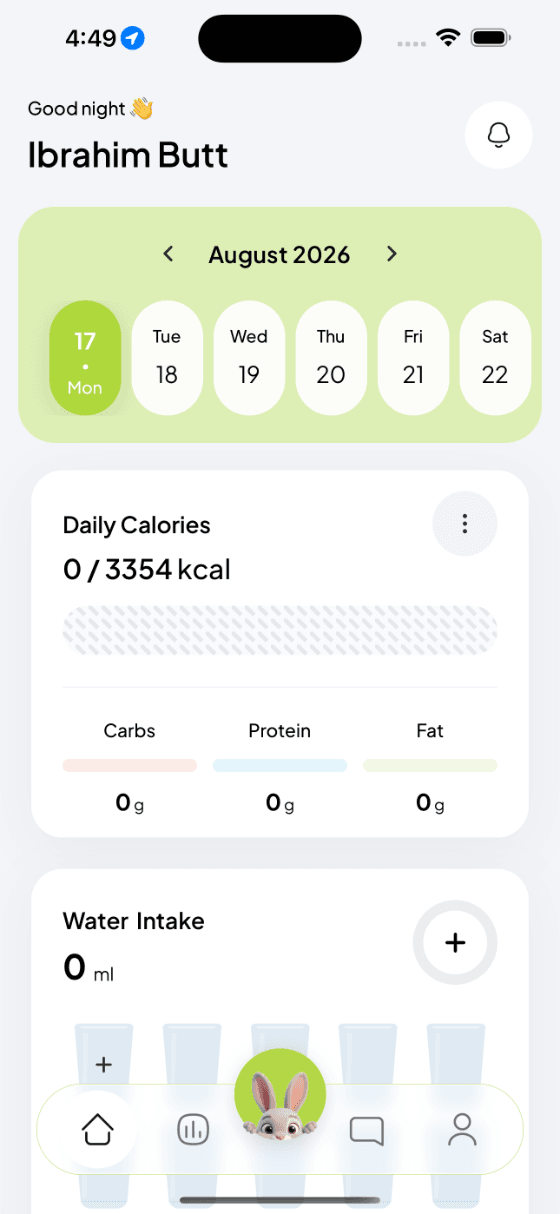
Knowing your target is the easy half. The reason most people stop counting is the logging itself — searching a database for “chicken curry” and guessing which of forty entries matches your plate. That friction, not motivation, is usually what ends it. If you want to see the number you just calculated next to what you actually ate, that is the problem Calybite, the AI food-tracking app, is built to remove.
Next, you might want to find your maintenance calories on their own, or split your calories into macros. If the number above surprised you, how to read your calorie number explains what moves it.
Sources
- Mifflin MD, St Jeor ST, et al. “A new predictive equation for resting energy expenditure in healthy individuals.” Am J Clin Nutr, 1990.
- Wishnofsky M. “Caloric equivalents of gained or lost weight.” Am J Clin Nutr, 1958 — the origin of the 3,500 kcal per pound rule, and a known simplification over long periods.
- Hall KD, et al. “Quantification of the effect of energy imbalance on bodyweight.” The Lancet, 2011 — why linear predictions overstate long-run loss.